
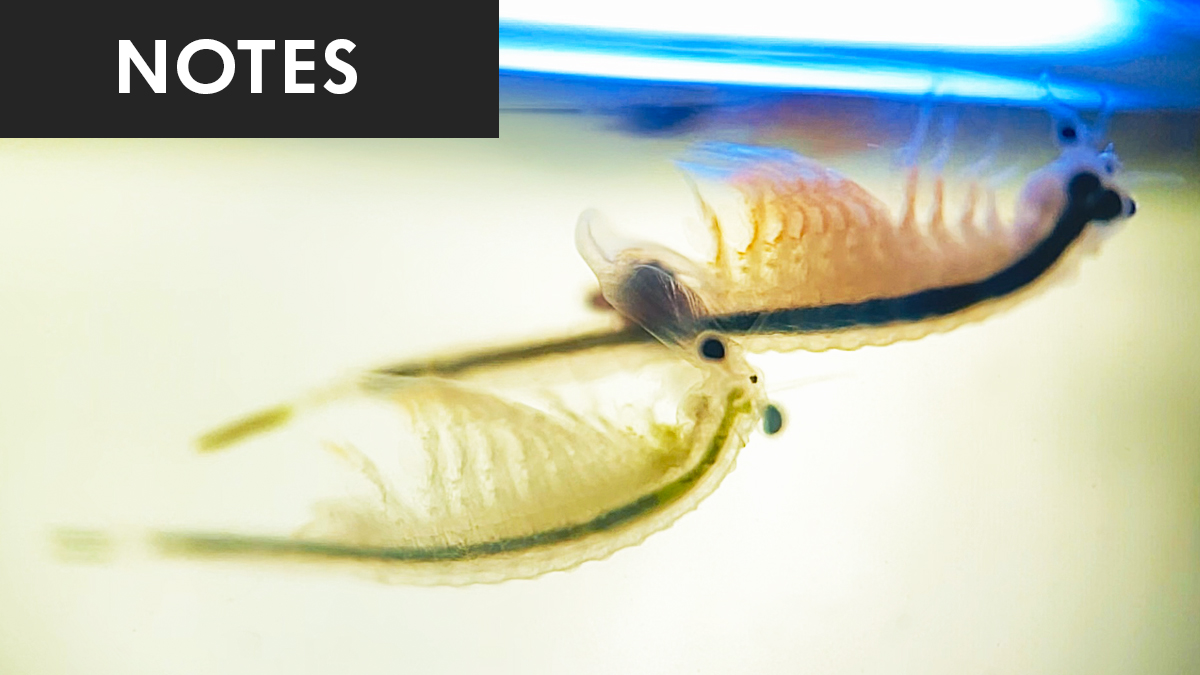
I’ve always been wondering why some of my brine shrimps are more pink than the others. Especially the female ones. After some keyboard-researching, I put together a few things that are known to cause the red colouration in brine shrimps.
They are what they eat
In the wild, brine shrimps feed on phytoplankton – microalgae and diatoms – that are found in their natural habitat. Some of the algae contain intense pigment that may pass on to the animals feed on them.
Dunaliella, for example, are species of single-celled algae found in brine shrimp’s natural environment. Dunaliella are high in beta-carotene, which is an intense red-orange organic pigment. Brine shrimps feed on those algae and can therefore develop the pinkish colouration.
Flamingos are pink also because they feed on those phytoplankton, as well as the brine shrimps that have fed on those algae. In other words, the pigment is passed down the food chain.
Beta-carotene is also passed to the brine shrimp eggs/cysts. As well as giving the cysts an orange tint, beta-carotene is an antioxidant which protects the embryo to remain viable inside the cysts for years.
They are born this way
Most of us probably have heard of haemoglobin, a protein specialised in carrying oxygen and the reason why our blood is red – the red blood cell contains haemoglobin which is red.
And brine shrimps also have haemoglobins, which probably can make the otherwise translucent brine shrimp look a bit pinkish, too.
Moreover, brine shrimps have the ability to gain or lose haemoglobins in their blood, as a way to adapt to the harsh conditions of the hypersaline habitats they live in.
This is because the higher the salinity and temperature, the less oxygen can be dissolved in the water. A hypersaline environment is usually high in both salinity and temperature. The organisms living in it, therefore, have evolved means to cope with the challenge of absorbing oxygen more efficiently.
Girl power
Brine shrimp keepers have reported that they see more red colouration in their female brine shrimps. I have also observed that in my own Artemia colony.
This may be related to the fact that the female can regulate haemoglobins more rapidly than the male.
They are infected… with tapeworm!!??
I first came across this idea via this YouTube clip which shows some super red brine shrimps. The author said that they are infected by tapeworm which causes the redness. So I did some digging on this.
A parasitic tapeworm, called Flamingolepis liguloides, goes through its life cycle between 2 types of host, the brine shrimp and the flamingo.
Once the brine shrimps are infected, they accumulate even more carotenoid pigments, turning into a striking red colour. They also change their behaviours, making themselves more visible and easier to be caught by flamingos.
When flamingos catch and eat the infected brine shrimps, the parasites are transferred to the flamingos. The infested flamingos poop the parasite and infest more brine shrimps in the surrounding water, completing the parasitic cycle.
Where flamingos are present, the majority of the brine shrimps found in this natural habitat would be infested with the tapeworm.
However, unless you are dealing with adult brine shrimp captured straight from the wild, keepers of normal sea monkeys or aqua dragons should not need to worry about this possibility…

 Monkeys in a Jar